Researched, written, and tracked across two banners
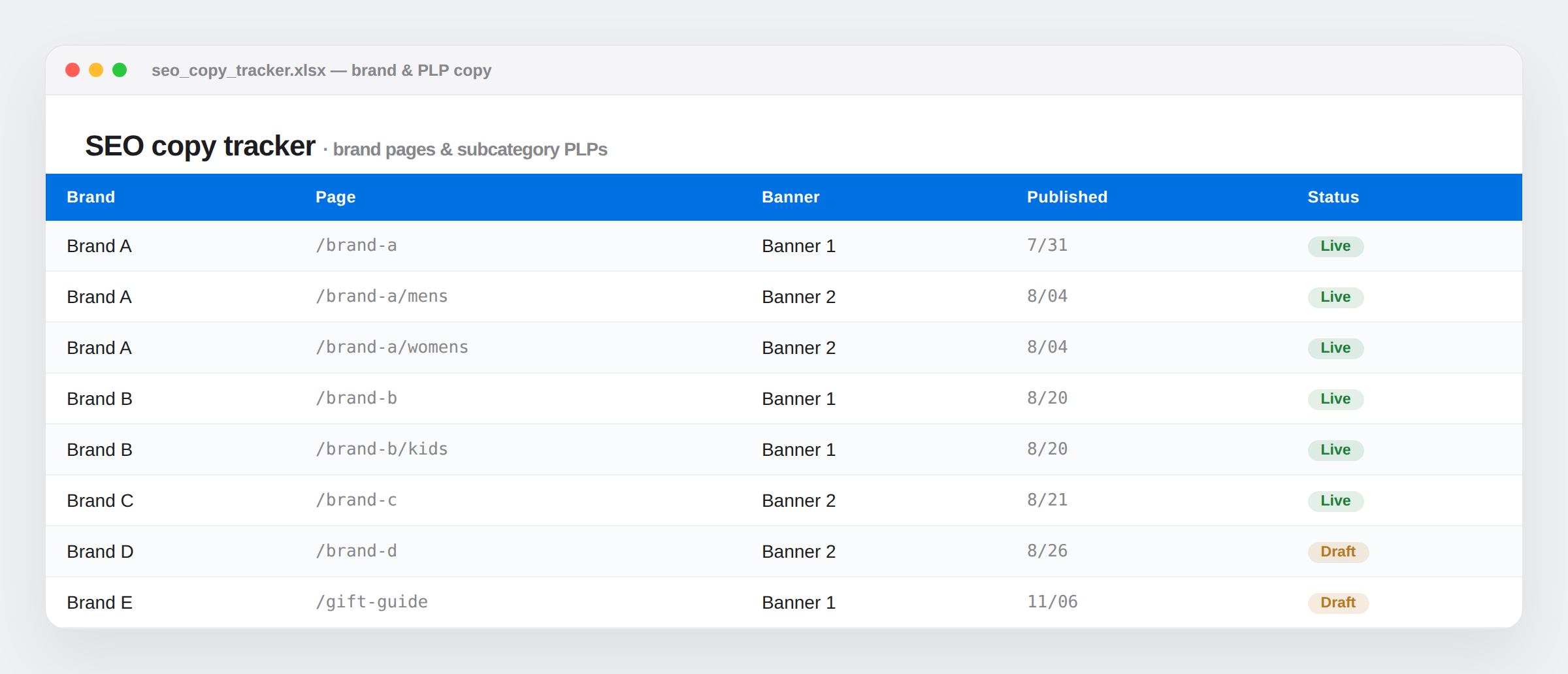
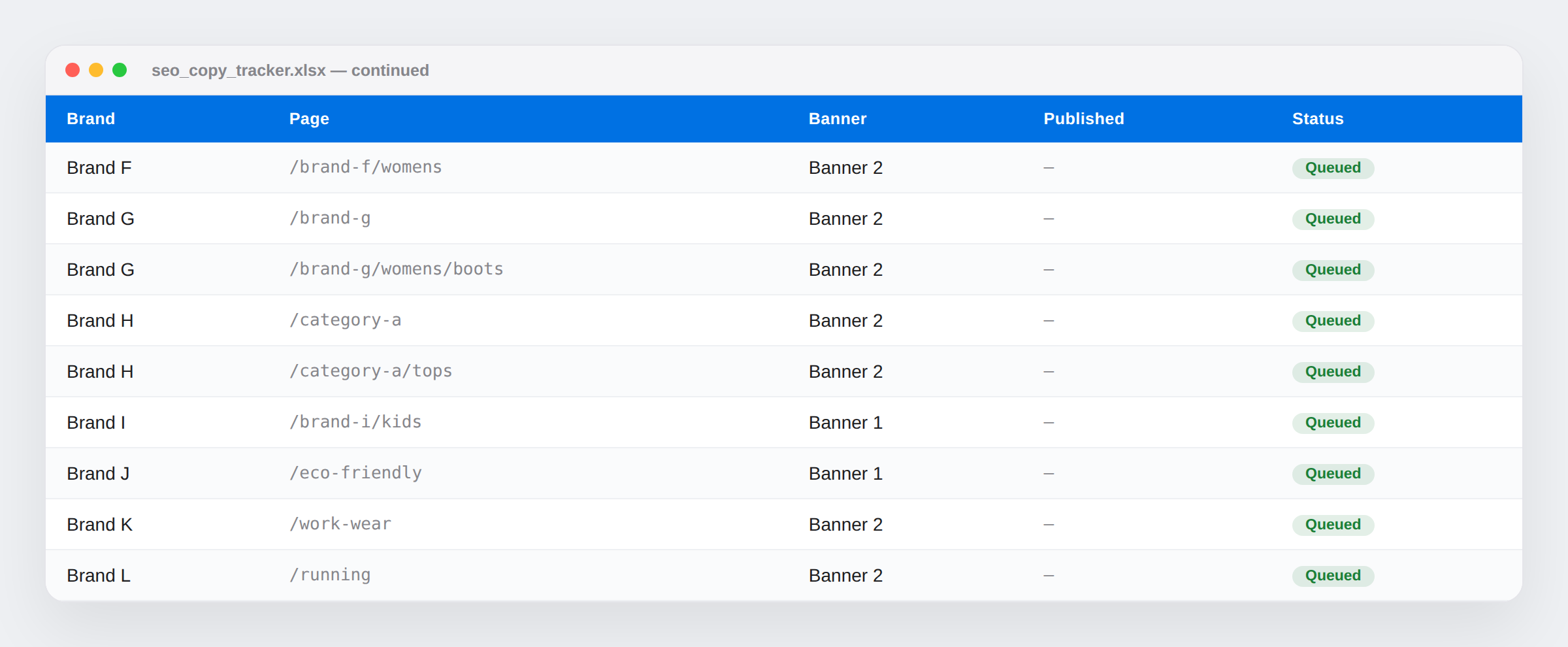
This project covered brand pages and subcategory PLPs for Shoe Carnival and Shoe Station. Shoe Station pages were primarily net new; Shoe Carnival was a mix of net new and refreshes of existing copy that had not been updated for AI-era search.
Each page required keyword research, brand voice calibration for the specific banner, structured formatting for SEO and AI readability (H-tag headlines, bullets, sectioned content), and a publish record in the tracking system before it was considered done.
Brands covered
Live copy — structured for search and for AI crawlers
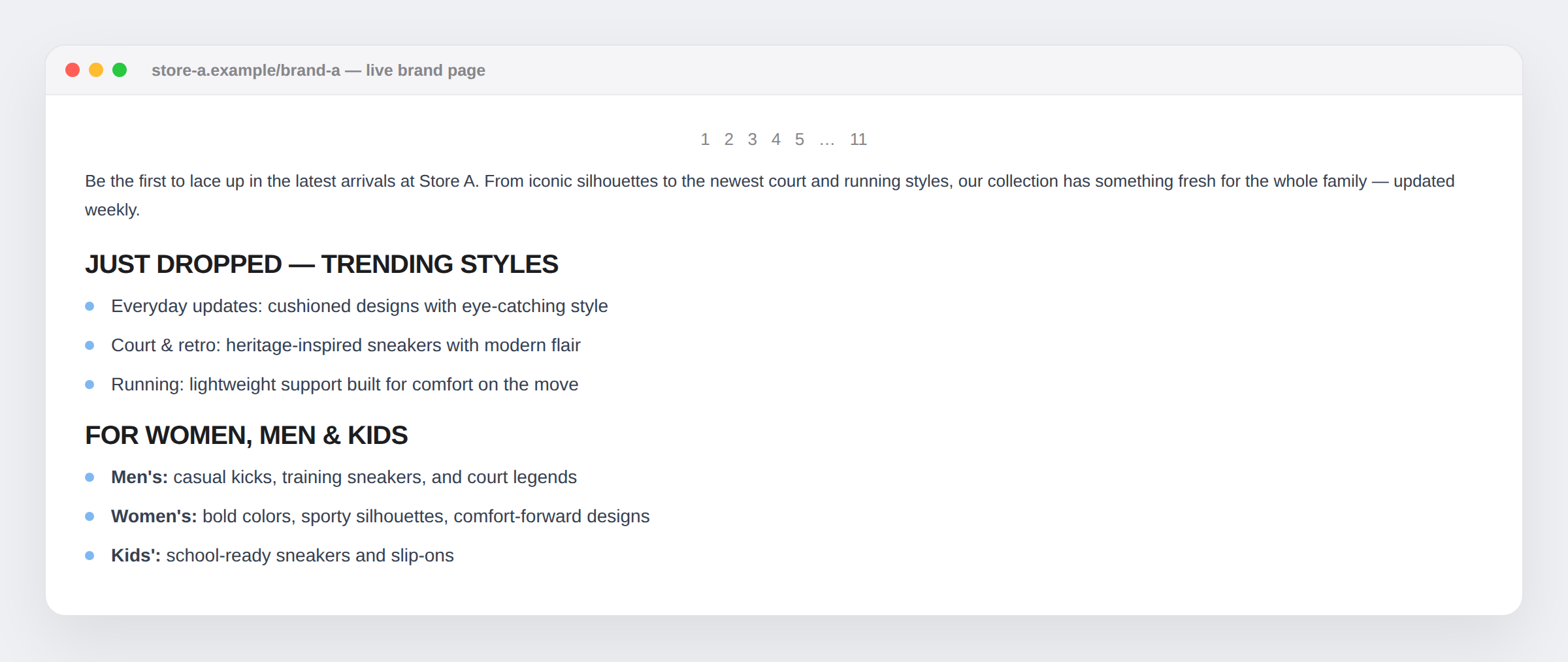
The format follows a consistent structure: an opening paragraph, H2-level thematic sections with bullet subcategories, a gender/category navigation block, a "why shop here" value section, and a closing CTA. This structure satisfies both traditional SEO signals and the entity-recognition patterns used by AI search engines.
Shoe Carnival Nike brand page — live on site
This was the reference page for the SC brand page format. The structure, heading hierarchy, and bullet pattern established here carried forward across all subsequent brand pages for the Shoe Carnival banner.
Every page logged. Every metric captured from publish date.
A tracking spreadsheet logs every page: brand name, page URL, which banner it lives on, the publish date, and a link to the source document. GA4 performance data was pulled and attached to create a pre/post baseline for each page.
The tracking system was built in parallel with the writing — not added retroactively. This means every page has a clean performance baseline from the day it went live.
What the data showed after publish
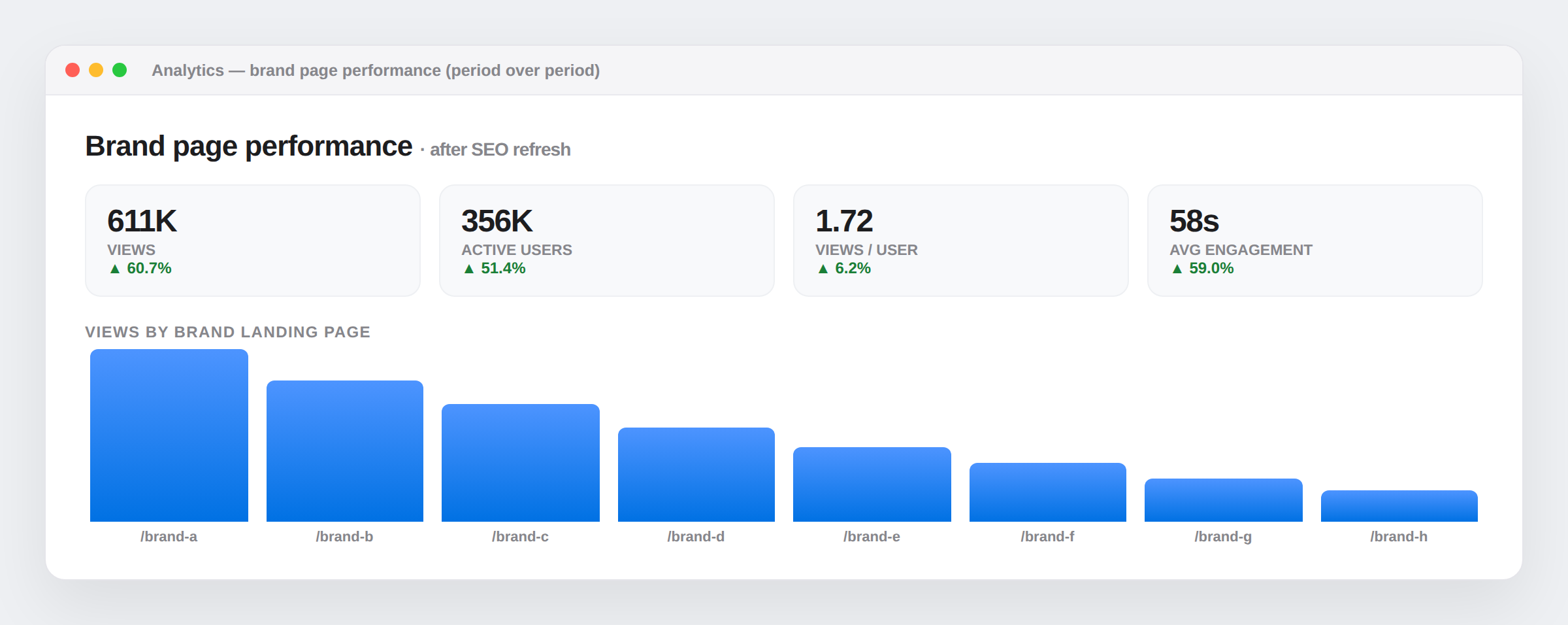
Selected GA4 results from pages tracked in the system. These represent performance change between the pre-publish window and the post-publish window for pages that had enough history to measure.
I wrote the descriptions and ensured each page was complete and live. I built the tracking system to measure what happened after. The GA4 data shows page performance post-publish. I tracked it. I did not claim sole credit for it.